Introduction
Sugarcane is one of the most important commercial crops grown in tropical and subtropical regions of the world. It is mainly cultivated for the production of sugar, jaggery, ethanol, molasses, and other by-products. Sugarcane is a long-duration crop that requires careful management throughout its growth cycle. Depending on the variety, climate, and cultivation practices, the crop generally takes 10 to 18 months to mature.
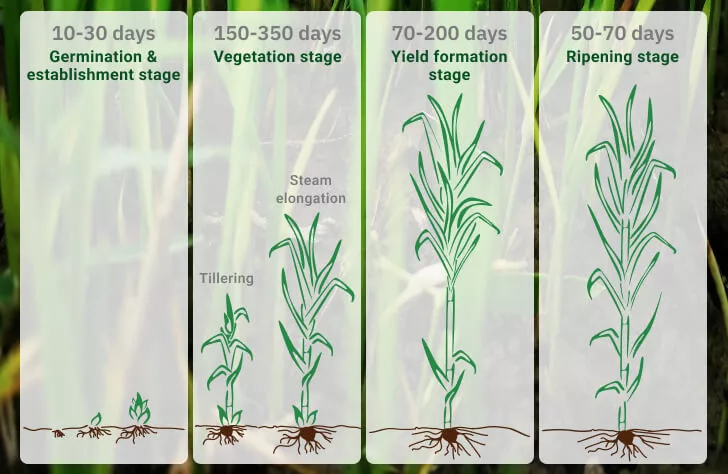
The growth period of sugarcane is divided into several stages, each with unique characteristics and specific requirements. Proper care during every stage helps farmers achieve healthy plants, higher cane weight, and maximum sugar content.
Total Growth Duration
The growth period of sugarcane varies according to the region:
- Early varieties: 10–12 months
- Mid-season varieties: 12–14 months
- Late varieties: 14–18 months
In tropical regions, sugarcane usually grows for about 12 months, while in subtropical regions it may require 14–18 months due to cooler temperatures.
Stages of Sugarcane Growth
1. Germination Stage (0–45 Days)
The germination stage begins immediately after planting the sugarcane setts (stem cuttings). Buds present on the setts start developing into new shoots.
Conditions Required
- Temperature between 25°C and 35°C
- Adequate soil moisture
- Well-drained fertile soil
- Good-quality seed cane
What Happens During Germination?
- Buds absorb water.
- Roots begin to develop.
- Young shoots emerge above the soil.
- Primary roots provide initial nourishment.
Importance
Good germination ensures proper plant population. Poor germination leads to reduced yield and uneven crop growth.
2. Tillering Stage (45–120 Days)
Tillering is the process in which the main shoot produces several side shoots called tillers.
Characteristics
- Rapid increase in the number of shoots
- Development of secondary roots
- Formation of a healthy root system
- Increase in leaf production
Management Practices
- Regular irrigation
- Application of nitrogen fertilizer
- Weed control
- Earthing-up to support the plants
Importance
A higher number of healthy tillers generally results in more mature canes at harvest.
3. Grand Growth Stage (120–270 Days)
The grand growth stage is the most active phase of sugarcane development. During this period, the crop grows rapidly in height and thickness.
Features
- Fast stem elongation
- Large increase in biomass
- Extensive leaf development
- Strong root expansion
The plant may grow 2–5 cm per day under favourable conditions.
Requirements
- Adequate water supply
- Balanced fertilization
- Sufficient sunlight
- Effective pest and disease management
Importance
Nearly 60–70% of the final cane weight is produced during this stage. Proper crop management during this period has the greatest influence on final yield.
4. Maturity and Ripening Stage (270 Days to Harvest)
This is the final stage before harvesting.
What Happens?
- Stem growth slows down.
- Sugar accumulates inside the cane stalk.
- Moisture content gradually decreases.
- Leaves at the bottom begin to dry naturally.
Suitable Conditions
- Bright sunshine
- Cool nights
- Reduced irrigation before harvesting
- Dry weather
Importance
Proper ripening increases sugar concentration and improves the quality of the harvested cane.
Factors Affecting the Growth Period
Several factors influence the duration and quality of sugarcane growth.
1. Climate
Warm temperatures encourage rapid growth, while cold weather slows plant development.
2. Soil Type
Deep, fertile, and well-drained loamy soils support healthy root growth and higher yields.
3. Irrigation
Sugarcane requires a consistent supply of water throughout most of its growth period. Water stress can reduce cane length and sugar yield.
4. Variety
Different sugarcane varieties mature at different rates. Early-maturing varieties are harvested sooner than late-maturing ones.
5. Fertilizer Management
Balanced application of nitrogen, phosphorus, and potassium promotes vigorous growth and better sugar accumulation.
6. Pest and Disease Control
Healthy plants grow more efficiently. Timely management of pests such as borers and diseases like red rot helps maintain crop productivity.
Seasonal Growth Pattern
Spring-Planted Sugarcane
- Planted during February–April
- Growth is rapid during warm months
- Harvested after about 10–12 months
Autumn-Planted Sugarcane
- Planted during September–October
- Develops roots before winter
- Resumes vigorous growth in spring
- Harvested after 12–14 months
Signs of a Mature Sugarcane Crop
Farmers identify maturity using several indicators:
- Leaves at the bottom turn yellow and dry.
- Cane becomes hard and heavy.
- Internodes are fully developed.
- Sugar content reaches its maximum level.
- Growth almost stops.
- The characteristic colour of the variety becomes visible.
Importance of Understanding the Growth Period
Knowing the growth stages helps farmers:
- Apply fertilizers at the correct time.
- Schedule irrigation efficiently.
- Control weeds effectively.
- Manage pests and diseases promptly.
- Harvest at the optimum stage for maximum sugar recovery.
- Increase both yield and profitability.
Challenges During the Growth Period
Sugarcane cultivation may face several challenges:
- Drought and water shortage
- Flooding and poor drainage
- Weed competition
- Insect attacks
- Plant diseases
- Nutrient deficiencies
- Extreme weather conditions
Proper field management and timely agricultural practices help minimise these problems.
Tips for Healthy Sugarcane Growth
- Use certified, disease-free planting material.
- Plant at the recommended spacing.
- Apply fertilizers based on soil testing.
- Irrigate regularly, especially during the grand growth stage.
- Remove weeds early.
- Monitor fields for pests and diseases.
- Perform earthing-up to support the canes.
- Harvest at the correct maturity stage for the highest sugar content.
Conclusion
The growth period of sugarcane is a long but carefully organised process that typically lasts 10 to 18 months. It consists of four major stages: germination, tillering, grand growth, and ripening. Each stage plays a vital role in determining the final yield and sugar quality. Successful sugarcane cultivation depends on proper irrigation, balanced fertilization, favourable climate, effective pest management, and timely harvesting. By understanding the growth period and providing the crop with the right care at every stage, farmers can achieve higher productivity, better sugar recovery, and improved economic returns.